


Educator CreatedDesigned by teachers
30-day returnshassle-free
Secure paymentsSSL encrypted
Ships in 3 daysfrom the US
Kindergarten
Grade 1
Grade 2
Sight Words + Extra Rainbow Mats
Sight Words + Extra Rainbow Mats
Regular price
$44.98
Sale price
$44.98
Regular price
$54.98
Unit price
per
Couldn't load pickup availability
Skills Covered After 30 Days
- Master the most common words for their grade level
- Can differentiate between words they can and cannot sound out
- Can read age-appropriate texts
- Increased fluency and comprehension skills
Key Features
- Ages 5-8 (K to Grade 2)
- 2-4 Players (or 1-on-1 Fun)
- Quick & Easy Play (15 min)
Rainbow Mats Features
- Safe & non-toxic
- Easy to clean
- Bright Color
- Animal Theme
- Sensory Play
Educational Standards
Common Core
- CCSS.ELA-LITERACY.RF.K.3.C Read common high-frequency words by sight
- CCSS.ELA-LITERACY.RF.K.2 Demonstrate understanding of spoken words, syllables, and sounds (phonemes).
- CCSS.ELA-LITERACY.RF.1.3 Know and apply grade-level phonics and word analysis skills in decoding words.
- CCSS.ELA-LITERACY.RF.1.3.G Recognize and read grade-appropriate irregularly spelled words.
- CCSS.ELA-LITERACY.RF.2.3 Know and apply grade-level phonics and word analysis skills in decoding words.
TEKS
- K.2B.iv: identifying and reading at least 25 high-frequency words from a research-based list
- 1.2B.vi: identifying and reading at least 100 high-frequency words from a research-based list
- 2.2B.vii: identifying and reading high-frequency words from a research-based list
B.E.S.T
- ELA.K.F.1.4: Recognize and read with automaticity grade-level high frequency words
- ELA.1.F.1.3: Use knowledge of grade-appropriate phonics and word-analysis skills to decode words accurately.
- ELA.2.F.1.3: Use knowledge of grade-appropriate phonics and word-analysis skills to decode words.
Ontario
- K- OE9.1 use reading behaviours to make sense of familiar and unfamiliar texts in print
- Grade 1- B2.8 read simple words, short sentences, and paragraphs in a variety of texts fluently, with accuracy and appropriate pacing to support comprehension, and read aloud with expression
- Grade 2- B2.5 read words, sentences, and paragraphs in a variety of texts fluently, with accuracy and appropriate pacing to support comprehension, and read aloud with expression and intonation
BC
- K- Language features, structures, and conventions: concepts of print, letter knowledge, phonemic and phonological awareness, letter formation
- Grade 1- Language features, structures, and conventions: concepts of print, print awareness, phonemic and phonological awareness, letter formation
- Grade 1- Read fluently at grade level
- Grade 2- Language features, structures, and conventions: word patterns, word families
- Grade 2- Read fluently at grade level
Alberta
- K- Children make connections between letters and sounds in words.
- K- Children experiment with sounds in words.
- K- Children recognize some letters and words with speed and accuracy.
- Grade 1- Students recognize and analyze letters and sounds in words.
- Grade 1- Students apply accuracy, appropriate rate, and expression in the development of fluency.
- Grade 2- Students apply understandings of letter combinations and sounds in words.
- Grade 2- Students apply fluency strategies while reading.
Manitoba
- K- Identify, analyze, and apply understandings of whole-part-whole relationships (e.g., function and relationship of parts within a whole design, cueing systems, fluency, word study).
- Grade 1- Identify, analyze, and apply understandings of whole-part-whole relationships (e.g., function and relationship of parts within a whole design, cueing systems, fluency, word study).
- Grade 2- Identify, analyze, and apply understandings of whole-part-whole relationships (e.g., function and relationship of parts within a whole design, cueing systems, fluency, word study).
New Brunswick
- K- Name letters and read some words with accuracy and expression.
- Grade 1- Read familiar words in developmentally appropriate text passages with accuracy and expression.
- Grade 2- Read with accuracy and expression.
Newfoundland & Labrador
- K- GCO 4: Students will be expected to select, read, and view with understanding a range of literature, information, media, and visual texts. 4.3 use strategies to make sense of texts 4.5 demonstrate letter knowledge.
- Grade 1- GCO 4: Students will be expected to select, read, and view with understanding a range of literature, information, media, and visual texts.4.3 use strategies to make sense of texts
- Grade 2- GCO 4: Students will be expected to select, read, and view with understanding a range of literature, information, media, and visual texts. 19.0 use strategies to make sense of texts.
Nova Scotia
- K- Use developing orthographic knowledge to decode and blend to read simple words and make a spelling choice.
- K- Read simple words and short sentences in a variety of texts fluently, with accuracy and appropriate pacing to support comprehension.
- Grade 1- Use developing orthographic knowledge, including position-based tendencies to decode a word, when reading with increasing accuracy
- Grade 1- Read simple words, short sentences, and paragraphs in a variety of texts fluently, with accuracy and appropriate pacing to support comprehension, and read aloud with expression.
- Grade 2- Use consolidated orthographic knowledge, including position-based tendencies, to accurately pronounce words when reading, and to spell words correctly.
- Grade 2- Read words, sentences, and paragraphs in various texts fluently, with accuracy and appropriate pacing to support comprehension, and read aloud with expression and intonation.
Prince Edward Island
- K- 3.8 begin to use some sight words, environmental print, and words that have personal significance to make sense of unfamiliar text
- Grade 1- begin to recognize some high frequency sight words
- Grade 2- Students will be expected to select, read, and view with understanding a range of literature, information, media, and visual texts.
- Saskatchewan
- K- CRK.2 View and interpret the basic message of visuals and objects in a variety of texts including models, photographs, dramas, dance creations, and videos.
- Grade 1- CR1.4 Read and comprehend grade-appropriate texts (including narratives, informational texts, scripts, and poems) by relating the sequence (i.e., beginning, middle, and end), the key points (who, what, when, where, and why), and the problems and solutions.
- Grade 2- CR2.4 Read and demonstrate comprehension of grade-appropriate literary and informational texts read silently and orally by relating and retelling key events and ideas in sequence with specific details and discussing how, why, and what if questions
Year 1
- apply phonic knowledge and skills as the route to decode words
- read accurately by blending sounds in unfamiliar words containing GPCs that have been taught
- read common exception words, noting unusual correspondences between spelling and sound and where these occur in the word
- read other words of more than one syllable that contain taught GPCs
Year 2
- continue to apply phonic knowledge and skills as the route to decode words until automatic decoding has become embedded and reading is fluent
- read accurately by blending the sounds in words that contain the graphemes taught so far, especially recognising alternative sounds for graphemes
- read accurately words of two or more syllables that contain the same graphemes as above
- read further common exception words, noting unusual correspondences between spelling and sound and where these occur in the word
- read most words quickly and accurately, without overt sounding and blending, when they have been frequently encountered
Years 3 and 4
- read further exception words, noting the unusual correspondences between spelling and sound, and where these occur in the word.
Our games are used in 50,000+ classroomsSpecial discounts for school districts and homeschoolers.
Get a Quote


Families Who Have Already Learned to Read
Skills Built
What skills does Sight Words + Extra Rainbow Mats build?
Phonics
Connecting sounds to written letters
Blends
Combining consonant sounds together
Vowel Sounds
Mastering short and long vowel sounds
Fluency
Reading smoothly and accurately
Vocabulary
Learning and using new words
30-Day Money Back Guarantee
How to Play
How to play Sight Words + Extra Rainbow Mats
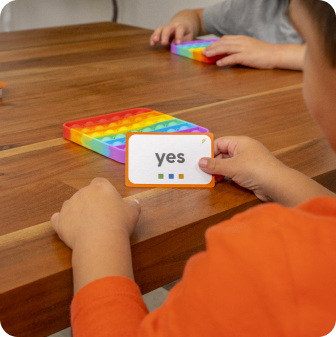
1
Choose a card pack that matches their grade level
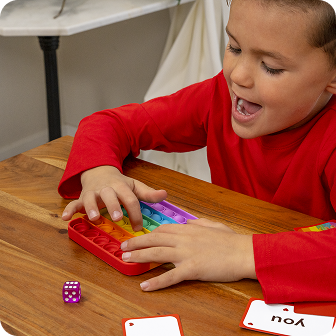
2
Flip a card and read the word aloud
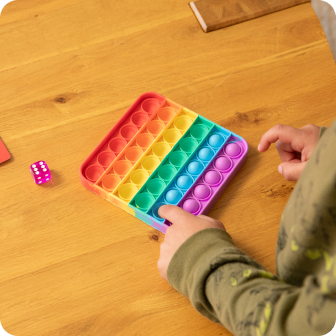
3
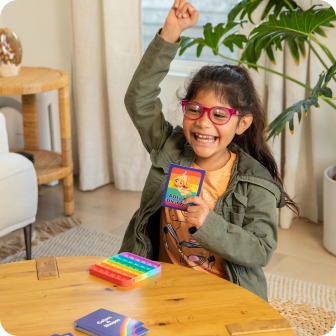
Roll the die and pop that many bubbles!
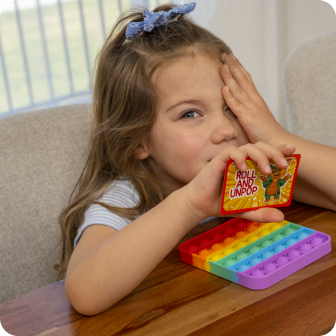
4
Unicorn card? Roll the die twice! Gremlin card? Roll and unpop bubbles!
5
First to pop all the bubbles and shout "Unicorn" wins!
Watch How Sight Words + Extra Rainbow Mats Works


* Results based on internal study with regular users. Individual results may vary.
You ask, we answer!
What is the return policy?
We offer a 30-day return policy for eligible items.