How do kids learn to read so fast playing this game?
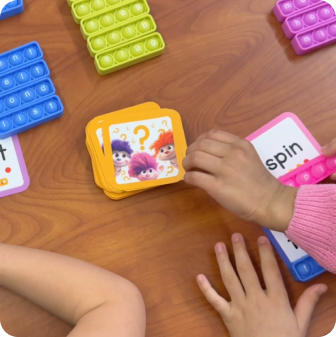
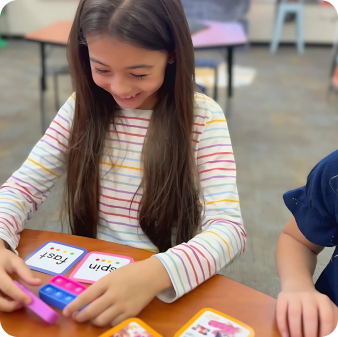
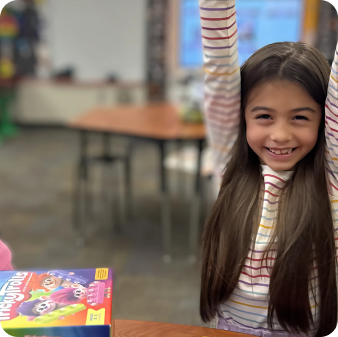
Tricky Trolls uses a multisensory and game-based approach to learning; this has been proven to improve knowledge and understanding by 90% in children. 95% of our customers reported their children improved reading skills within two weeks of playing this game.
Why is multisensory learning so important?
Multisensory activities are based on whole-brain learning, encouraging learners to use more than one of their senses when taking in new information. When using more senses while learning to read educational researchers have found this increases word recognition and improves memory by 90%.
Why are there letters on the Fidget Mats?
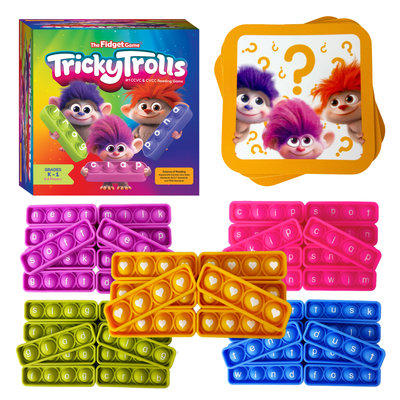
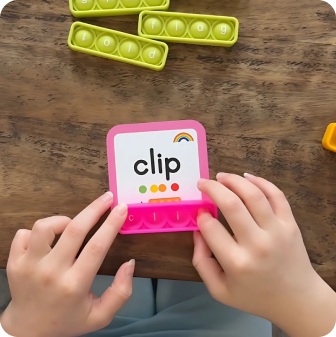
The fidget mats have letters to provide a hands-on, tactile experience that helps kids actively engage with the letters while they practice blending sounds and building words. By popping the letters, children reinforce letter recognition and phonics skills, making it easier for them to connect sounds to written words. The sensory feedback from popping helps solidify learning in a way that’s fun and memorable, turning a typical phonics lesson into an interactive and exciting activity!
Should children learn Phonics skills first or Sight Words?
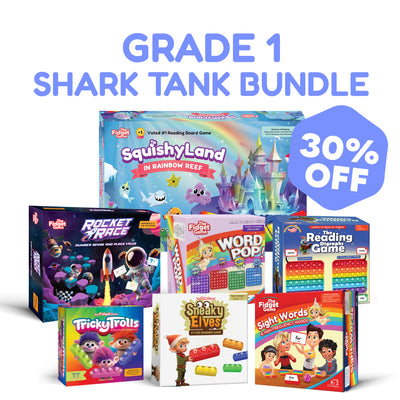
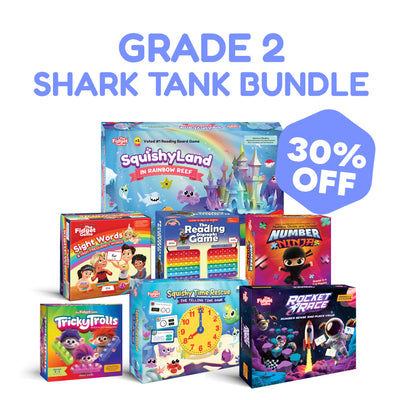
Research shows overwhelmingly that systematic phonics is the most effective way of teaching reading to children of all abilities, including dyslexia. Sight word instruction is an excellent supplement to phonics instructions. It is recommended that children learn at least 10-20 sight words before formal phonics instruction. We recommend purchasing The Fidget Game: Sight Words, Word Pop, and Tricky Trolls for the most effective learning experience.
What are CVCC and CCVC words, and why are they beneficial to learn?
CCVC (consonant-consonant-vowel-consonant) and CVCC (consonant-vowel-consonant-consonant) words are part of the first words students should learn to read because their simple pattern makes it easier for children to transform individual sounds into short, simple, familiar words.
Should children learn to read on screens or print?
Yes! Research from Stanford University shows that students who learn to read using print materials, rather than screens, develop significantly faster reading rates and stronger fluency and comprehension skills. This hands-on game offers an engaging, screen-free way to reinforce reading skills, making it an even more effective tool for learning.